The Future of Marketing: AI Marketing Trends 2026
Beyond Automation: How AI Is Creating the Next Generation of Marketing.
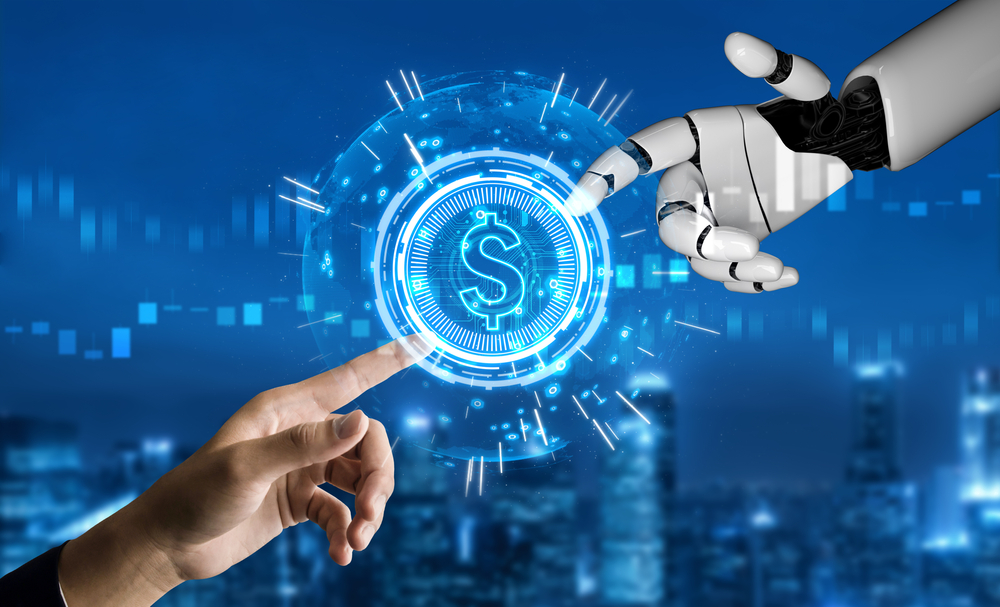
Artificial intelligence has rapidly evolved from a futuristic concept to a practical engine powering some of the most effective marketing strategies today. Over the past few years, AI has shifted from assisting with isolated tasks to orchestrating entire customer journeys, driving efficiencies, and unlocking new creative potential. As we look ahead at the future of marketing, AI’s influence is expected to deepen even further—reshaping not only how brands communicate but also how they understand and interact with their audiences on a fundamental level.
The Evolution: From Automation to Intelligence
In its earliest marketing applications, AI served primarily as an automation tool. Marketers relied on rule-based systems to trigger emails, assign lead scores, or perform basic segmentation. While valuable at the time, these tools offered limited adaptability—they did what they were programmed to do, and not much more.
The real transformation began when machine learning and predictive analytics entered the scene. As AI began to learn—synthesizing huge volumes of data, quickly identifying patterns, and making predictions in real time—a new era was ushered in:
1. Hyper-Personalization
AI made it possible to tailor content, recommendations, and offers to individuals rather than broad segments. Recommendation engines fueled e-commerce growth by predicting what each customer was most likely to purchase. Meanwhile, email and web personalization boosted engagement by ensuring every user saw something personally relevant to them.
2. Smarter Advertising
Ad platforms began using AI to optimize bids, target audiences, and allocate budgets across channels. Marketers no longer had to guess or extensively test which creatives or placements would perform best—algorithms quickly tested, learned, and optimized continuously.
3. Conversational Engagement
The rise of AI-powered chatbots and virtual assistants brought scalable, 24/7 customer interactions. These tools evolved from simple FAQ responders into sophisticated conversational systems capable of capturing leads, solving issues, and recommending products.
4. Advanced Analytics
AI-driven analytics tools made it easier to forecast demand, predict customer churn, and understand attribution across complex customer journeys. Insights that once required manual analysis were increasingly automated and more accurate, making it easier to scale marketing efforts.
Today’s Landscape: Generative AI Redefines What’s Possible
A significant leap in recent years has been generative AI—systems capable of producing human-quality text, images, video, code, and even strategy.
For marketing practictioners, this has been transformative. However, for customer-centric advocates keen on caring for the human-side of marketing, the leap is often viewed through the a more concerning lens:
Content Creation at Scale
Generative AI accelerates content production. Marketers can draft blogs, ad copy, email sequences, and social content in minutes. While AI advocates suggest that AI doesn’t replace creativity—only amplifies it by offering a starting point or expanding ideas, AI still struggles to communicate on an authentically human level—often misreading human emotion and plagiarizing content.
Near Real-Time Personalization Across Channels
Dynamic content generation allows marketers to tailor messages instantly—personalized product descriptions, individualized landing pages, or even custom video messages generated on the fly. However, we still haven’t achieved”real-time” personalization on an authentic level, which is necessary if a brand desires to genuinely connect with audiences.
Creative Testing and Optimization
Perhaps one of the most welcomed advances is with regard to testing. Instead of manually creating and testing a handful of ad variations, marketers can use generative AI to produce and optimize hundreds of creatives simultaneously, identifying winning formats with precision. Yet, there still is a need for human oversight, as AI still struggles to produce authentic images—often creating extra limbs on humans in ads or adding additional unwanted elements.
Enhanced Customer Interactions
Conversational AI is becoming more humanlike, more helpful, and more capable of providing personalized, context-aware support. While the line between customer service and marketing continues to blur, not every conversation becomes an opportunity to drive loyalty or conversion. Customer feedback often highlights frustration with the machine—as AI struggles to understand subtle nuances within human communications and interactions, making the transaction more laborious.
AI Marketing Trends 2026: The Next Era of Marketing Intelligence
While AI is already reshaping marketing, the future of marketing promises even more profound shifts.
1. Fully Autonomous Campaigns
We’re moving toward systems that can design, launch, monitor, and optimize campaigns with minimal human input. But at what cost? AI advocates suggest that marketers will serve as strategists and supervisors, while AI handles execution and iteration. Perhaps, but what exactly does that mean for authentic human connections when the machine handling the execution isn’t human? Will autonomous algorithms outrank human experience?
2. Unified, Predictive Customer Intelligence
AI will increasingly integrate data across platforms—CRM, social, website, email, and ads—creating a living, predictive profile of each customer. Brands will be able to anticipate needs, tailor experiences instantly, and intervene before churn happens.
3. Emotionally Intelligent Interactions
AI advocates suggest that future AI systems will interpret emotional signals—tone, sentiment, and engagement patterns—and adjust messaging accordingly. The result: potentially “more empathetic, humanlike interactions that resonate on a deeper level.” As a customer advocate, I disagree. The machine is not human, and I don’t suspect it ever will be. And if brands aren’t careful in their pursuit of more revenue, they could potentially mistake “emotional intelligence” with “emotional manipulation,” thereby trampling upon customer-centricity and genuine engagement.
4. AI-Driven Creative Strategy
Generative models won’t just produce creative assets—they’ll recommend conceptual directions, identify emerging cultural trends, and help brands stay ahead of audience preferences. However, there is still much work to be done in this area. I’ve used many of the ad delivery platforms on social media. And based upon my personal experience, seasoned creative strategies developed by customer-centric humans outperform the machine 5:1.
5. Ethical and Transparent AI Marketing
As AI becomes more integrated, brands will face rising expectations around transparency, privacy, consent, and data responsibility. AI advocates suggest that ethical AI will become a competitive advantage, influencing consumer trust and regulatory compliance. This is still in question for me, as the basis for this claim is rooted more in brand rather than in customer. Ethics require more than algorithmic sound judgement. It requires a human capacity for morality—something not only the machine struggles with today, but humans as well.
The Human Role: Creativity, Strategy, and Meaning
While AI advocates will continue to expand its capabilities, human marketers still remain invaluable. The face of corporate marketing will no doubt significantly change, but now more than ever, there is a need for the human touch. AI’s ability to improve analysis, data processing, scaling, and optimization is immense—but it can’t replicate human intuition, nuance, or emotional connection.
Successful marketers in the future will be those who understand how to collaborate with AI—using it not as a crutch, or manipulative tool, but as a powerful partner in improving outcomes for both brand and customer.
Conclusion
AI has already revolutionized marketing, enabling unprecedented personalization, efficiency, and creativity. As AI becomes more autonomous, more predictive, and more emotionally aware, it will reshape how brands connect with customers—for better or worse. The future belongs to marketers who embrace these tools thoughtfully—pairing human vision with machine intelligence to create experiences that are both innovative and respectfully human-centered.